Maternity Clinic
The Maternity Clinic provides you and your partner / family pregnancy monitoring and support so that your pregnancy, the birth and the care of your baby become a safe experience for the whole family.
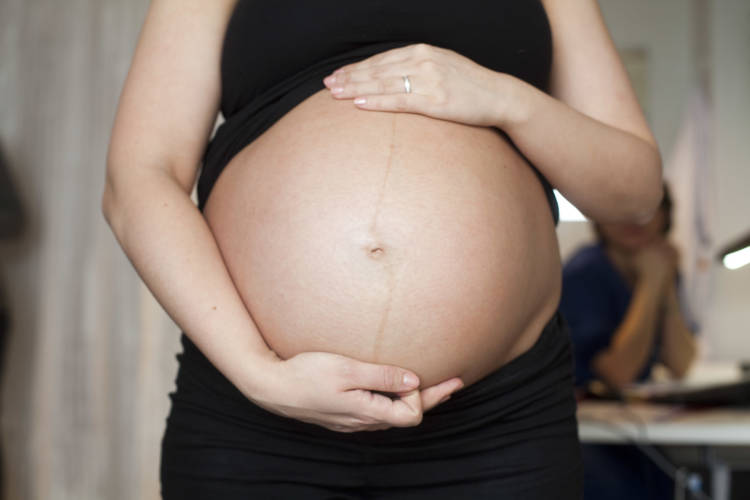
Activities of the Maternity Clinic
You can take contact to your local Maternity Clinic already in early pregnancy, when your period has stopped. The prenatal first visit to the Maternity Clinic happens usually at the 8th or 9th week of pregnancy. Your partner is also welcome to the consultation visits.
During pregnancy, you usually visit the nurse or midwife 8-9 times. These pregnancy visits include one extensive health check-up and at least two medical check-ups. A home visit is provided after delivery. The postpartum examination is performed either by a doctor or a trained nurse or midwife. In addition to these visits, additional visits will be arranged according to individual needs.
The person who gives birth to the child is the child’s mother. If the mother is married when the child is born, the husband is the father of the child. If the mother and father are not married when the child is born, paternity must be established and confirmed separately. When a female couple has a child through fertility treatment, the non-biological mother can be confirmed as the child’s second mother through recognition.
Every third child is born to a cohabiting family. In these families, biological paternity is usually clear, and the partner wants to acknowledge the paternity of the child. In this case, a separate visit to the Child Welfare Officer is not required after the birth of the child. Paternity can be acknowledged at the Maternity Clinic even before the child is born (from the beginning of 2016).
The recognition of parenthood is carried out primarily at the Maternity Clinic before the birth of the child and secondarily at the Child Welfare Officer. The parents expecting the child will be informed of the recognition in connection with the Maternity Clinic visit. Recognition can be made when the pregnancy has progressed beyond the 25th week of pregnancy. Both parents must be present at the recognition ceremony and their identity will be verified with an appropriate identity document. Both must understand the meaning of recognition and the legal consequences of recognition. If the pregnancy originated during fertility treatment, a fertility treatment certificate must be present at the recognition event.
The establishment of parenthood creates a legally valid family relationship. The child’s parents are liable for maintenance and the child is entitled to maintenance up to the age of 18. Even after that, the child is entitled to maintenance for education, if it is reasonable. The child will have the right of inheritance to the family of the party who recognized the parenthood, as well as the right to a surname. At the same time, the confessor also has custody of the child.
The Digital and Population Data Services Agency confirms parenthood after the birth of a child and sends the decision on the confirmation of parenthood directly to the parents by post. The Digital and Population Data Services Agency may refuse to confirm parenthood if there is reason to doubt the parenthood of the confessor.
It is still not possible to agree on sole custody, maintenance, visitation rights or housing at Maternity Clinics. If necessary, these matters are agreed upon with the Child Welfare Officer after the birth of the child.
Family Coaching
Family coaching is provided to families expecting their first child. The aim is to prepare the family for childbirth, breastfeeding, childcare, upbringing and parenting. In addition, the goal is to strengthen parents’ knowledge and skills about childcare, parenting, health, and healthy habits.
Your own Maternity Clinic provides more information about the time and implementation of family coaching. On the link below, you can also watch family coaching videos (in Finnish or Swedish).
You can also find a lot of useful family coaching information in English and other languages via the link below. You can learn for example about exercise, intoxicants and nutrition during pregnancy, when to go to hospital for labour, breastfeeding and low mood after childbirth.
Information about pregnancy and labour
From the links below you can acquire additional information about pregnancy, labour, mental health, intoxicants, prenatal screening and physical training during/after the pregnancy.
General information
- We are having a baby (Finnish institute for health and welfare)
Nutrition
- Special diet recommendations for pregnancy (City of Helsinki)
- Diet during pregnancy (Neuvokas perhe)
- Pregnant and breastfeeding mothers (Finnish Food Authority)
- Gestational diabetes – what should I know about it? (Neuvokas perhe)
- Gestational Diabetes Online course (Finnish diabetes association)
Physical activity
- Weekly Physical Activity Recommendation during Pregnancy (UKK Institute)
Prenatal screening
- Prenatal screening (National Institute for Health and Welfare)
- Prenatal screening (Ministry of Social Affairs and Health)
Mental health
Intoxicants
- Intoxicants (HUS)
The prenatal class is meant for you who are expecting your first child. The best time to attend the class is from pregnancy week 32 onwards. The class is held by a midwife working on the delivery ward. The class provides information about the different stages of labour and you practise breathing- and relaxation exercises.
The class is held at Vaasa Central Hospital or as online classes through Teams. You will find more information and registration instructions via the following link.
Omaperhe provides reliable information and support for family planning and families. It provides guidance on self-care and helps you find the right family centre services for your family.
Distribution of Iodide Tablets from Maternity Clinics
The Wellbeing Services County of Ostrobothnia distributes potassium iodide tablets to families with under 3-year old children and to pregnant women. This is in accordance with the guideline of the Ministry of Social Affairs and Health on the use of medical iodine in the event of a radiation hazard situation and preparedness.
The iodide tablets will be distributed to the households at a regular visit to the clinic. Pregnant women will also receive iodide tablets for their child to be born. For the rest of the population, i.e. children over 3 years and adults up to 40 years of age, self-preparedness is recommended. Households can purchase iodine tablets from pharmacies.
In the iodide package there is important information about how and when to use the tablets. Read this information carefully!
Payment for non-cancelled or a late cancelled booking.
You must cancel your appointment no later than the previous working day. For late cancellations or no-show appointments, we withhold the right to charge a fee according to our current pricing policy. The fee is charged to everyone over the age of 18. No fee is charged, if there is a valid reason for not cancelling the appointment, such as a medical certificate.
Exceptional opening hours summer 2024
Northern area:
– Alaveteli Maternity Clinic, closed on Wednesdays weeks 30-32
– Luoto Maternity Clinic, closed weeks 31-32 (reception in Pietarsaari)
– Pännäinen Maternity Clinic, closed weeks 25-32 (reception in Ähtävä)
– Uudenkaarlepyy Maternity Clinic, closed week 30
– Ähtävä Maternity Clinic, closed week 33 (reception in Pännäinen)
Keskinen alue:
– Vöyri Maternity Clinic, reduced operations and occassionally closed
Southern area:
– Korsnäs Maternity Clinic, closed 15.7-11.8 (reception in Maalahti)
Contact information
(find your contact information by clicking on your municipality)
Telephone number and hours
Maternity Clinic Kruunupyy and Alaveteli, telephone hours from 09:30-10:30
tel. 040 489 2304
Electronic services
You can schedule a phone appointment with the maternity clinic:
- Initial phone contact after detecting the pregnancy
- Other non-urgent matters
- Booking a home visit after returning home from the maternity ward
Please write the reason for the booking in the additional information box.
Address
Maternity Clinic Alaveteli
Misterhultintie 4
68410 Alaveteli
Maternity Clinic Kruunupyy
Säbråntie 1
68500 Kruunupyy
Telephone numbers and hours
Maternity Telephone Counselling, telephone hours weekdays 08:00-11:00
tel. 06 786 1230
Family Therapist Anna-Maria Vibäck, telephone hours weekdays 11:00-11:30
tel. 050 313 5027 (also text messages) or 06 786 1246
Electronic services
You can schedule a phone appointment with the maternity clinic:
- Initial phone contact after detecting the pregnancy
- Other non-urgent matters
- Booking a home visit after returning home from the maternity ward
Please write the reason for the booking in the additional information box.
You can book follow-up appointments to the family therapist:
- Individual counseling
- Parent counseling
- Couples counseling
Video appointment is available. When booking the appointment, please write in the additional information box, if you prefer attending remotely.
If you haven’t seen the family therapist before, please book your first appointment via telephone.
Addresses
Maternity Clinic Pietarsaari
Kolpintie 7 / Pohjanlahdentie 1, Entrance H, 1st floor
68601 Pietarsaari
Maternity Clinic Luoto
Pajutie 2B
68570 Luoto
Maternity Clinic Ähtävä
Bärklarintie 3
68810 Ytteresse
Maternity Clinic Pännäinen
Vaasantie 1
68910 Pännäinen
Maternity Clinic Uusikaarlepyy
Mathesiuksenkatu 9, Entrance C
66900 Uusikaarlepyy
Telephone numbers and hours
Oravainen Maternity and Contraception Clinic, weekdays 09:30–10:00
tel. 050 597 8458
Vöyri Maternity and Contraception Clinic, weekdays 09:30-10:00
tel. 050 563 9027
Maksamaa Maternity and Contraception Clinic, weekdays 09:30-10:00
tel. 050 597 8458 (Oravainen) tai 050 563 9027 (Vöyri)
Electronic services
Book your first telephone appointment at the Maternity Clinic online:
We need information about your latest menstruation, previous pregnancies, possible diseases and medicine in use.
Adresses
Oravainen Maternity and Contraception Clinic
Öurintie 25
66800 Oravainen
Vöyri Maternity and Contraception Clinic
Lääkärintie 3
66600 Vöyri
Telephone numbers and hours
Mustasaari Maternity and Contraception Clinic, telephone hours weekdays 9.30–10.00
I public health nurse tel. 06 218 4096
II public health nurse tel. 06 218 4102
III public health nurse tel. 06 218 4063
Your own nurse/midwife provides telephone nursing services on weekdays from 09:30-10.00. The telephone number is written on your maternity clinic card.
Electronic services
Book your first telephone appointment at the Mustasaari Maternity and Contraception Clinic online:
Address
Mustasaari Maternity and Contraception Clinic
Health Centre, Entrance C
Vanha Karperöntie 17 B
65610 Mustasaari
Telephone numbers and hours
Telephone hours for the public health nurse are weekdays at 11:00-11:30.
Gerby, Isolahti, Pukinjärvi, Vetokannas and Västervik
I public health nurse, tel. 040 187 1812
II public health nurse, tel. 040 482 5186
Hietalahti, Suvilahti, Korkeamäki and Vähäkyrö
I public health nurse, tel. 040 482 5207
II public health nurse, tel. 040 179 9575
Huutoniemi, Teeriniemi, Melaniemi, Purola, Asevelikylä, Haapaniemi and Impivaara
I public health nurse, tel. 040 482 5179
II public health nurse, tel. 040 136 9143
Palosaari, Metsäkallio, Koskisuo, Kotiranta, Kivihaka, Vöyrinkaupunki and Länsiniitty
I public health nurse, tel. 040 482 5187
II public health nurse, tel. 040 187 6635
Keskusta, Sundom, Ristinummi, Vanha Vaasa, Runsor, Kråklund, Kappelinmäki and Höstvesi
I public health nurse, tel. 040 482 5161
II public health nurse, tel. 040 482 5135
Address
Vaasa Maternity Clinic
Tammikaivontie 4, Building 3, 3rd floor
65100 Vaasa
Entrance from the pond side (map).
Electronic services
Log in to the health care appointment booking portal with online banking IDs or a mobile certificate. For ordering, the electronic transaction agreement must be filled in under Forms. Messages can be sent and read under Messages.
Telephone number and hours
Laihia Maternity and Contraception Clinic, weekdays 11:00-11:30
tel. 040 184 2313
You can book an appointment by calling the nurse. You can also ask for the results of specific laboratory tests.
Address
Laihia Maternity and Contraception Clinic
Vallinmäentie 43
66400 Laihia
Electronic services
You can send and receive messages to/from your nurse using electronic services.
Telephone number and hours
Maalahti Maternity and Contraception Clinic, weekdays 12:00–12:30
tel. 050 530 5248
Address
Maalahti Maternity and Contraception Clinic
Maalahti-Korsnäs Health Station
Tamppitie 2
66100 Maalahti
Telephone number and hours
Korsnäs Maternity and Contraception Clinic, weekdays 12:00–12:30
tel. 050 464 1646
Address
Korsnäs Maternity and Contraception Clinic
Health Station
Norrbyntie 9
66200 Korsnäs
Telephone number and hours
Närpiö Maternity and Contraception Clinic, telephone hours weekdays 09:30–10:00
tel. 06 224 9440
Electronic services
Electronic services available in Finnish and Swedish.
Instructions
You can also leave a call-back request on weekdays at 08:00–12:00 and you will be called back no later than the next working day.
Mothers living in Kaskinen receives services at Närpiö Maternity Clinic.
Address
Närpiö Maternity and Contraception Clinic
Family Service Center
Närpiöntie 4
64200 Närpiö
Telephone numbers and hours
Appointment booking and telephone counselling, weekdays 08:30–09:30
tel. 06 218 6012
Public health nurses
Anna Andtfolk, tel. 040 198 3868
Esmy Nevala, tel. 040 084 7760
Electronic services
You can schedule a phone appointment with the maternity clinic:
- Initial phone contact after detecting the pregnancy
- Other non-urgent matters
Please write the reason for the booking in the additional information box.
Address
Kristiinankaupunki Maternity and Contraception Clinic
Lapväärtintie 10
64100 Kristiinankaupunki
Head Nurses of our Maternity and Contraception Clinics
Deputy Maria Pettersson, maria.pettersson@ovph.fi
Kruunupyy, Luoto, Pietarsaari, Pedersöre, Uusikaarlepyy, Vöyri, Mustasaari
Marjaana Carlsson, marjaana.carlsson@ovph.fi
Vaasa, Laihia, Maalahti-Korsnäs, Närpiö
Senior nurse Susann Granlund, tel. 044 424 9105, susann.granlund@ovph.fi